Misery Bay Provincial Park offers a toddler-friendly hike that ends with a relaxing beach, along with a chance to discover fascinating geological history in the globally rare Alvar habitat.
I have been on a wonderful quest to explore the landscapes and natural wonders of my home province, Ontario. The region of Northeastern Ontario in particular captivates me with its serene and unspoiled beauty. Despite its remote location, it is easily accessible within a few hours by car from the Greater Toronto Area.
I love that because road trips suit us well with our toddler still napping in the afternoon and just the fact that I can pack half my home with me is of great comfort to me. Meltdowns, hangry tantrums of mommy and daddy or drive-time singalongs – everything happens inside the car.
The Seven, as Northeastern Ontario is now nicknamed after the number its area code starts with, keeps drawing me back because its tranquility and abundance of nature helps me escape the mundane routine of suburban life and brings a sense of peace to my frazzled nerves (more on that another time).
This July, we loaded our car with toys and snacks, our ice box with yogurt cups, cheese sticks, Hawaiian rolls, apple sauce pouches and our phones with many episodes of Ms Rachel and Cocomelon, and set out to Manitoulin Island. You can dive into the details of day one of our journey in my Manitoulin Island travelogue. Another helpful item to pack is a plush toy and blanket. My toddler tends to tip his head to the side when napping in the car seat and the plush toy helped relieve his neck while sleeping.
Thanks to our friendly innkeeper at the Manitoulin Inn who recommended Misery Bay Provincial Park for its kid-friendly hiking trail. So after a leisurely next morning and a long wait for a mediocre breakfast at the popular Mum’s Restaurant & Bakery in Mindemoya, we finally arrived at Misery Bay in the late afternoon. The sun was blazing hot by then, and I was glad to have been fully prepared for it with hats, sunglasses, gatorade and a light stroller for my son to sit on if he got tired.
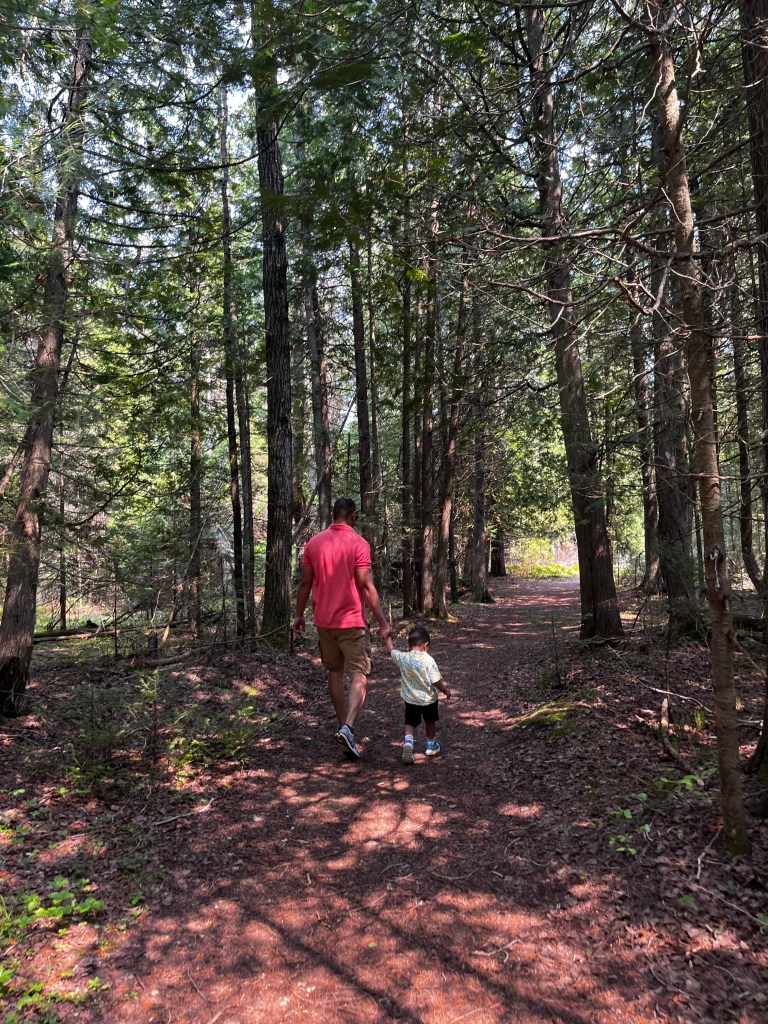
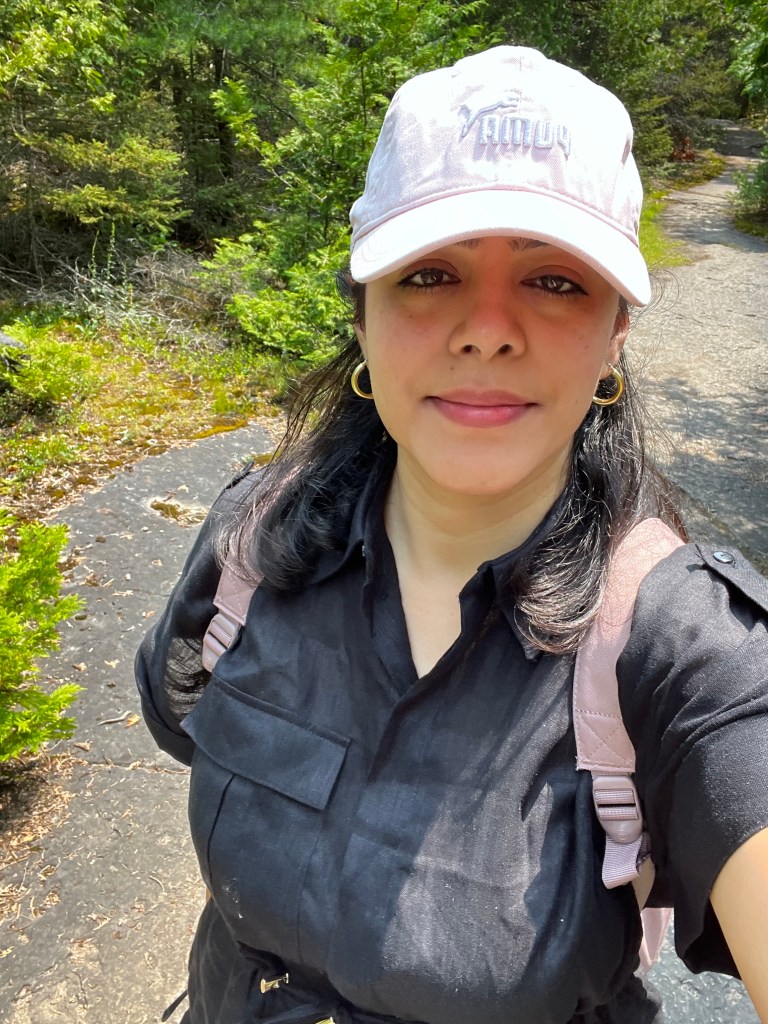
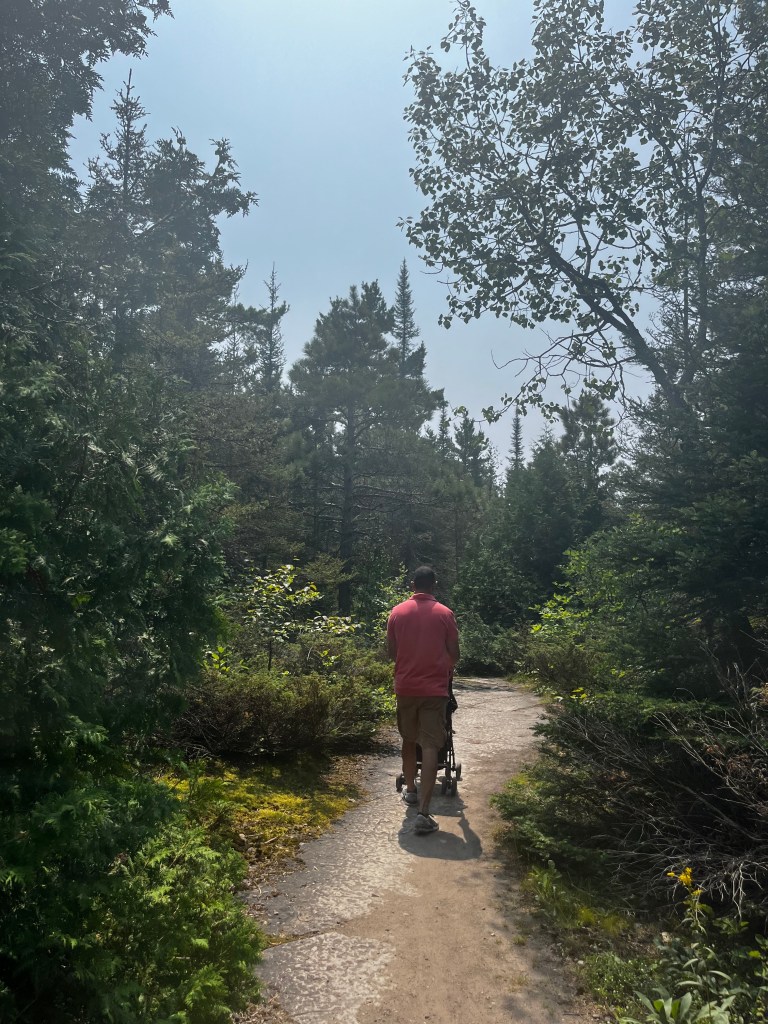
Once we purchased our vehicle permit at the park office, we started our hike on the Inland Alvar Trail. We completely missed out on the Coastal Alvar Trail, which would have taken us along the shoreline. But no regrets. I do intend to return and walking on the inland trail protected us from the heat and was a relatively shorter distance to the beach. Plus it was very convenient to use my son’s stroller and have him in it if he got tired of walking. The path was flat throughout, and at first, I assumed it was paved with concrete. But soon, the shrubs and trees gave way to vast, flat rock beds. I was intrigued – how could such a smooth, flat trail exist so deep in the wilderness?
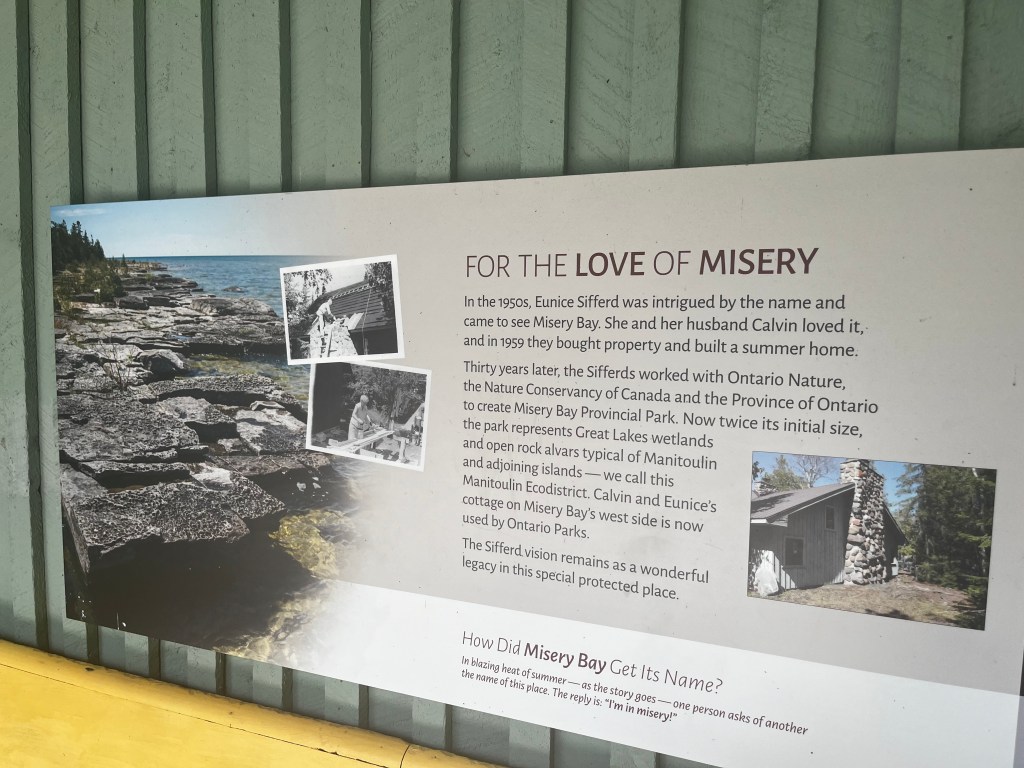
Misery Bay Provincial Park is not only a place of natural beauty but also a geological wonder, protecting one of Manitoulin Island’s remarkable alvar coasts and coastal wetlands.
Flat-lying, smooth expanses of exposed limestone pavement, Alvars are a rare geological feature.
The Friends of Misery Bay perfectly capture the park’s ecological significance:
“Misery Bay Provincial Park is located on an ancient flat rock sea bottom and features areas of flat limestone plains known as alvars, unique habitats that host highly specialized vegetation adapted to the harsh conditions of this environment. During late spring and late summer, the alvars are ablaze with wildflowers. It is this feature that makes Misery Bay a world-class nature reserve. The Great Lakes Basin has the only alvars in North America, and many of the world’s alvars are found here. The Manitoulin cluster of alvars is considered among the most significant in the world.”
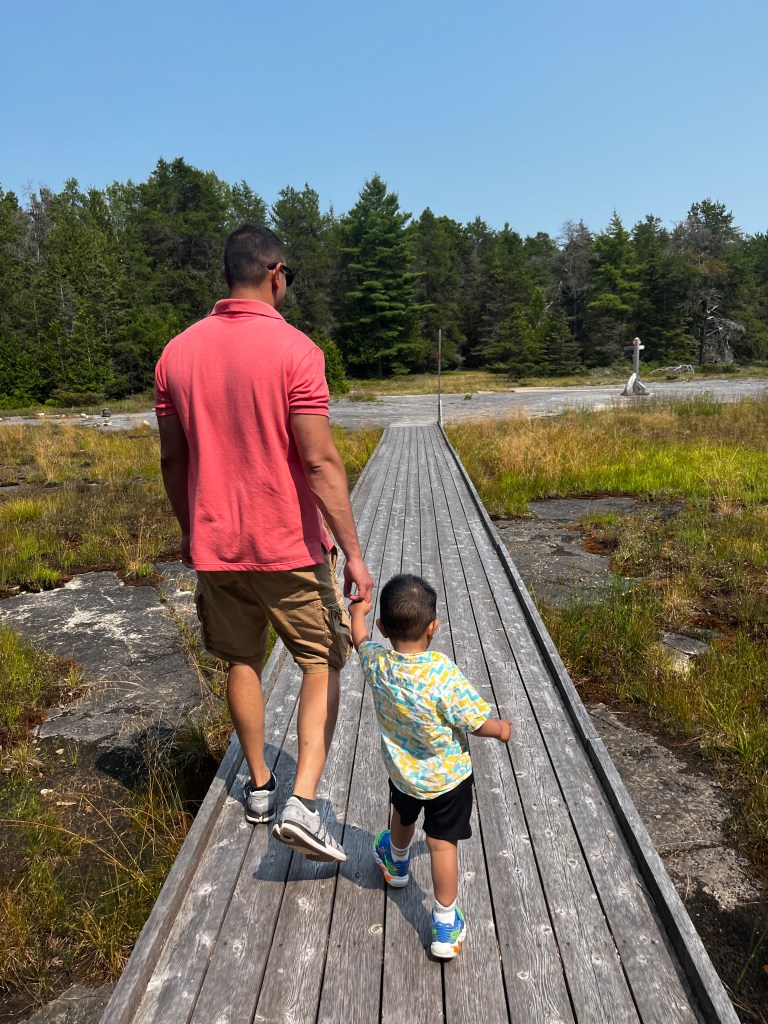
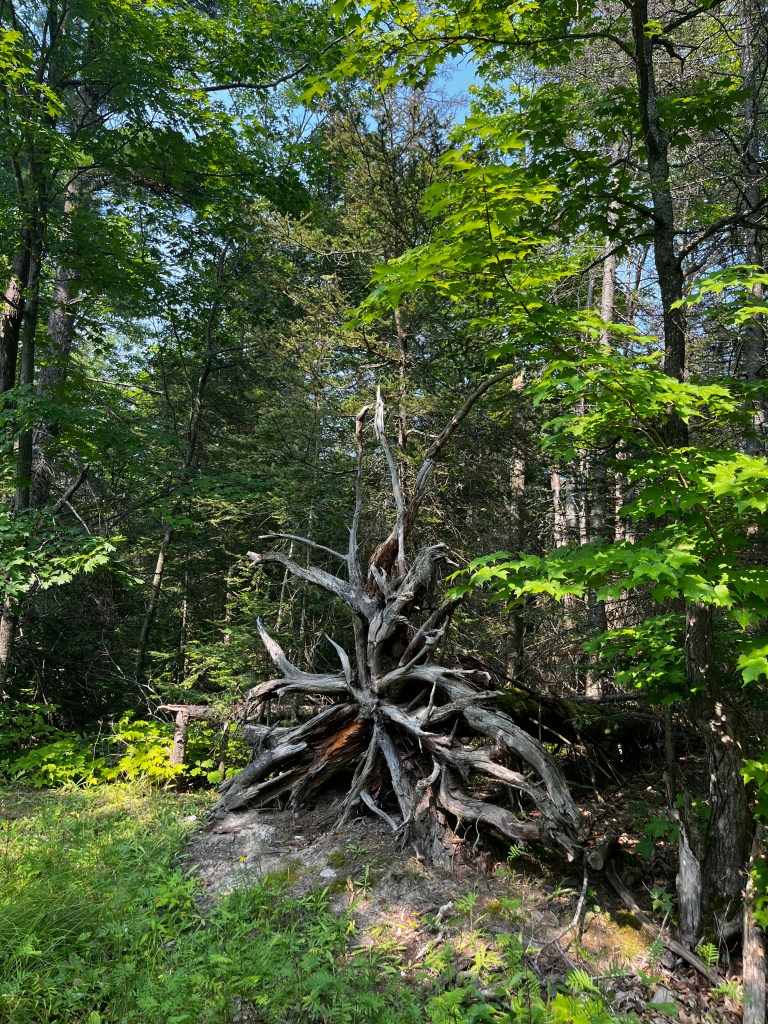

Alvars (a Swedish word), are globally rare, naturally open habitats with either a thin covering of soil or no soil over a base of carbonate rock, such as limestone and dolostone; it is one reason why Manitoulin Island is unique. Most of the features on the island likely formed in the last 15,000 years following the last glaciation period.*
*Credit: Professor Back Roads Bill Steer for northernontario.travel
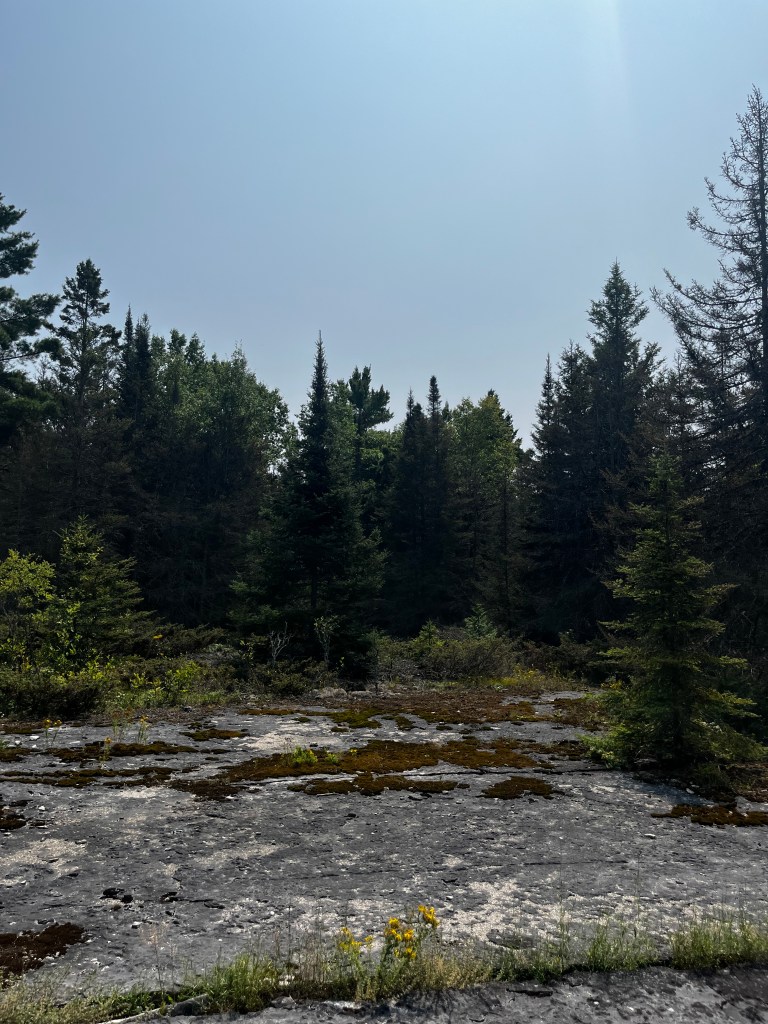
Alvars provide habitat for a distinctive set of rare or at-risk species that have adapted to life here.*
*Credit: Nature Conservancy of Canada
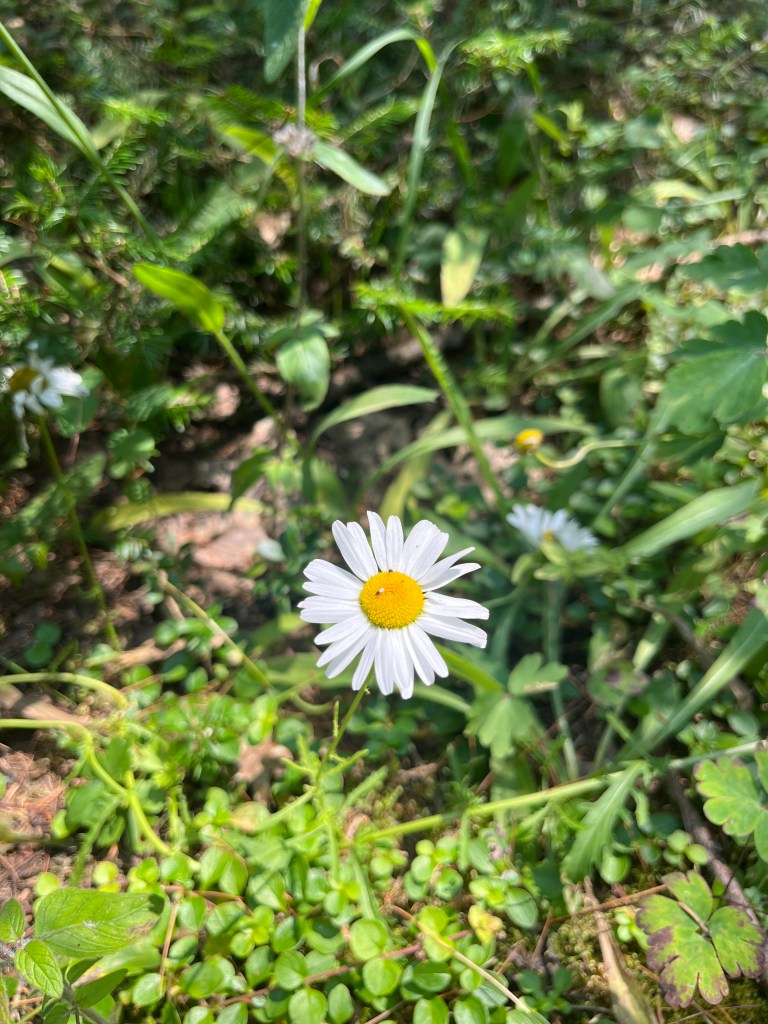
This ecosystem hosts rare plant species like the lakeside daisy and various mosses and lichens that can survive in the thin soils.

What to expect at Misery Bay
- The only operating (day-use only) provincial park on Manitoulin Island, where nature’s beauty awaits your exploration!
- Provides access to scenic Lake Huron Coastline
- Eco-friendly Visitor Centre
- 15 km of hiking trails
- Rare plants and globally significant ecosystems
- Great educational programming
There is no camping at Misery Bay Provincial Park. It is a day use only park.
 Meesha Sharma
Leave a comment